YK Meaning: YK stands for “you know” — a casual, conversational shorthand baked into everyday digital communication. Sometimes it flips to “you’re kidding,” depending entirely on context and punctuation.
Here’s the thing: two identical letters carry two completely different energies. Miss that distinction, and you’ll misread conversations constantly.
Beyond texting, yk lives across TikTok, Snapchat, dating apps, and even brand marketing — evolving fast. Knowing exactly how and when to use it separates fluent digital communicators from everyone else still playing catch-up in 2026.
What Does YK Actually Mean? (Core Definition)
The Primary Definition — “You Know”
The most common yk meaning in chat is “you know.” It functions as a conversational filler — the digital equivalent of trailing off mid-sentence because you assume the other person gets it.
“That test was brutal, yk?” “She’s the type who always shows up late, yk what I mean.”
In both cases, yk isn’t adding new information. It’s inviting agreement, building rapport, signaling shared understanding. Think of it as a verbal nudge.
Secondary Definition — “You’re Kidding”
Here’s where it gets interesting. In certain contexts — usually when someone shares surprising or absurd news — yk flips to mean “you’re kidding.”
“I won the whole tournament.” “YK?! That’s insane!”
Same two letters. Completely different meaning. The shift is almost always signaled by punctuation (an exclamation mark, a question mark, or both) and the surrounding context.
Context-Dependent Interpretations at a Glance
| Context | YK Meaning | Tone |
|---|---|---|
| End of a casual statement | “You know” | Relaxed, familiar |
| After surprising news | “You’re kidding.” | Shocked, excited |
| Mid-sentence filler | “You know” | Conversational |
| Sarcastic reply | After the surprising news | Dry, ironic |
| Seeking agreement | “You know?” | Confirmatory |
Where Did YK Come From? (Origin & Evolution)
The Rise of SMS Shorthand in the Early 2000s
Before smartphones, texting cost money. Literally — carriers charged per character or per message. So people got creative, stripping words down to their bare bones. “You know” became yk. “laughing out loud” became lol. It wasn’t laziness; it was economy.
These texting shorthand words didn’t just survive. They thrived — spreading from SMS into instant messaging platforms like AIM and MSN Messenger.
How Texting Culture Normalized Abbreviations Like YK
By the mid-2000s, texting abbreviations like yk were everywhere. Teenagers especially used them as a kind of social currency — shorthand that marked you as in-the-know. If you had to ask what yk meant, you were already behind.
YK’s Journey Into Social Media (2010s → 2026)
When Twitter launched with its 140-character limit, abbreviations got a second wind. Instagram captions, Snapchat messages, and later TikTok comments all rewarded brevity. YK’s meaning in social media evolved naturally from the SMS era — same abbreviation, bigger audience.
By 2020, yk appeared regularly in viral posts. By 2026, it’s embedded in digital communication language across demographics.
How Gen Z Reshaped Its Tone and Frequency
Gen Z didn’t invent yk, but they absolutely turbocharged it. They layered irony onto it, used it sarcastically, and spread it through short-form video captions. The yk slang trend owes a huge debt to TikTok’s comment culture, where brevity is everything and tone is everything else.
How People Actually Use YK in Conversations
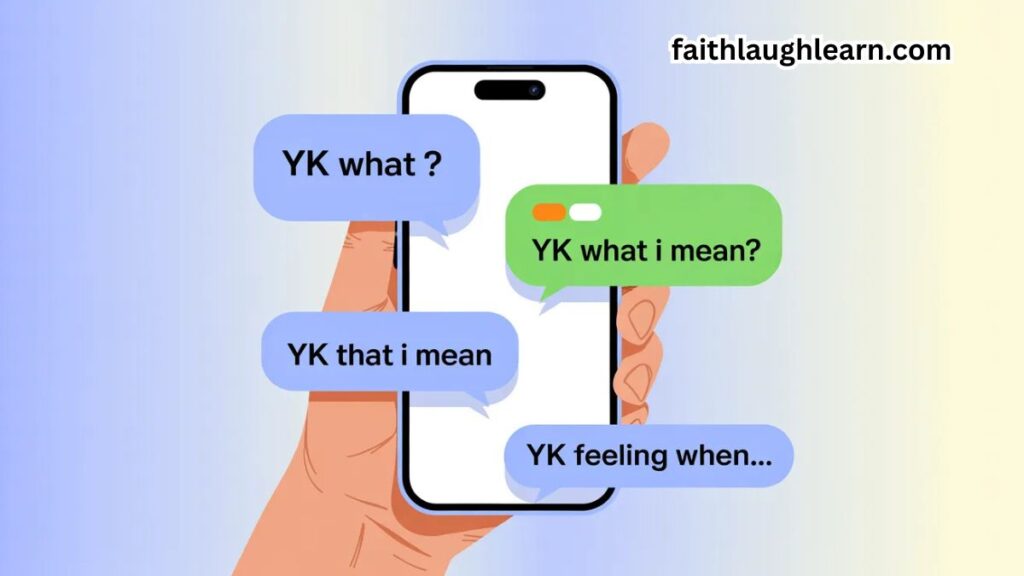
Understanding yk’s meaning in texting isn’t just about the definition. It’s about how the word behaves in the wild.
YK as a Filler — Casual Acknowledgment in Texting
This is the bread-and-butter use. Someone wraps up a thought and drops yk to soften it, make it feel less declarative. It’s the linguistic equivalent of a shrug.
“Finals week is just brutal, yk.”
No response required. It’s practically rhetorical.
YK as Emphasis — Stressing a Point Mid-Sentence
Sometimes yk punches up a sentence rather than trailing it off.
“She’s yk, that person who acts nice but isn’t.”
Here it’s doing the work of a pause — drawing your attention to what follows.
YK as a Question — Seeking Confirmation or Agreement
When there’s a question mark attached, yk is fishing for validation.
“That was kind of rude of him, yk?”
Translation: Do you agree with me? It’s subtle but deliberate.
YK as Sarcasm or Shock — “You’re Kidding”
This version tends to arrive in all caps or with heavy punctuation.
“She got promoted after three months.” “YK!! Are you serious?!”
The energy is unmistakable. The tone does the heavy lifting here.
Real Conversation Examples
Casual Filler:
A: “I’ve been so tired lately, yk?” B: “Same. Like all the time.”
Shock/Surprise:
A: “My flight got cancelled and rebooked for next week.” B: “YK?! That’s the worst timing ever.”
Seeking Agreement:
A: “He just never listens, yk?” B: “Honestly yeah, I’ve noticed that too.”
YK Across Every Major Platform in 2026

The YK meaning in social media isn’t universal — each platform has its own culture, and YK adapts to all of them.
YK on Snapchat — Why It’s Especially Common Here
Snapchat was built for impermanence and speed. Messages vanish. Captions are short. YK meaning in Snapchat leans almost entirely toward “you know” — a casual, comfortable shorthand between close friends. It rarely shows up as “you’re kidding” here because Snap’s vibe is too intimate for theatrical shock.
Snap story caption: “Beach day with my people, yk the vibe 🌊”
YK on TikTok Comments and Captions
TikTok is where yk gets the most creative mileage. Comment sections are fast, competitive, and irony-heavy. YK meaning on TikTok often carries a knowing, sarcastic edge — like you and the creator share a private joke with the whole internet.
“That plot twist had me like yk 💀”
YK trending slang on TikTok also benefits from the platform’s algorithm. One viral comment using yk can spark a wave of imitation.
YK on Instagram DMs vs. Public Comments
The YK’s meaning on Instagram splits neatly by location:
- DMs: Warm, familiar, casual — classic “you know” usage
- Public comments: Often more performative — can tip into “you’re kidding” territory when reacting to a creator’s post
YK on Discord Servers and Gaming Chats
Discord communities are fast and text-heavy. YK used in chat here tends to be punchy and impatient — users don’t have time for full sentences mid-raid or during a heated debate in a server.
“This build is broken, yk? Like actually overpowered.”
YK on Twitter/X — Brevity Culture and Abbreviation Norms
Twitter/X has always rewarded compression. YK internet meaning on this platform leans toward commentary — users drop it when reacting to news, drama, or cultural moments.
“The way they handled that situation… yk it was deliberate.”
YK in iMessage and WhatsApp Group Chats
The YK’s meaning in WhatsApp and iMessage is the most personal of all. These are intimate spaces — family threads, friend groups, partner chats. Here yk is pure “you know” — comfortable, low-stakes, totally natural.
YK Beyond Texting — Other Fields and Uses
YK in Music Lyrics and Pop Culture References
Hip-hop and R&B have long embraced casual conversation filler words in lyrics. YK appears across SoundCloud rap tracks, drill music, and bedroom pop — usually as a verbal tic that mirrors how real people talk.
Artists like Polo G, Lil Durk, and various underground acts use yk in both lyrics and social captions, cementing its place in modern slang yk culture.
YK as a Name or Username
YK also doubles as a username or artistic alias. Several rappers, streamers, and influencers go by YK-something — most notably YK Osiris, the R&B singer with hits like “Worth It.” This dual identity (abbreviation + name) keeps the term circulating in searches, which partly explains its sustained SEO interest.
YK in Professional Contexts — Does It Ever Belong There?
Short answer: rarely. YK’s meaning in professional chat is a minefield. In a casual Slack channel with close colleagues, it might fly. In a formal email or client message? It reads as sloppy.
Is yk formal or informal? Entirely informal. Treat it like a text-message-only phrase unless your workplace culture is explicitly Gen Z-coded.
YK in Brand Marketing and Gen Z Advertising
Smart brands have started mirroring Gen Z’s online communication phrases to feel less corporate. You’ll see yk in brand tweets, Instagram story captions, and TikTok video text. Done well, it builds credibility. Done badly, it reads like a 45-year-old in a snapback.
Age, Gender & Demographic Patterns — Who’s Using YK?
Gen Z vs. Millennials — Who Uses It More and Why
| Generation | YK Usage | Typical Context |
|---|---|---|
| Gen Z (born 1997–2012) | Very high | TikTok, Discord, Snapchat, casual texting |
| Millennials (born 1981–1996) | Moderate | WhatsApp, iMessage, Twitter/X |
| Gen X and older | Low | Rarely, usually after learning it from a younger family member |
Gen Z didn’t just adopt yk — they own it. It’s baked into their informal English slang vocabulary the way “like” was baked into Millennial speech.
How Age Shapes Interpretation
Here’s a real dynamic: a 17-year-old texts their parent “yk” and the parent reads it as technical jargon or an error. The teenager meant “you know” — a gesture of closeness. The parent saw noise. That gap is exactly why understanding yk’s meaning in English matters across generations.
Regional Differences
Is yk global slang? Largely yes. English-speaking countries — the US, UK, Canada, Australia, Nigeria, and India — all use yk with the same core meanings. However, in non-native English communities, the “you’re kidding” interpretation is less common because the phrase itself is more idiomatic.
Common Mistakes and Misreadings of YK
Confusing “You Know” With “You’re Kidding” Mid-Conversation
This is the big one. Misreading “you’re kidding” as “you know” completely derails a conversation.
A: “I just quit my job.” B: “YK?!” A: (reads it as “you know”) “Yeah, I know I did.”
That’s a comedic misfire. Context and punctuation are your best friends here.
Tone Blindness — When YK Reads Passive-Aggressive
“yk.” — with a period — can land cold. A dry, punctuated yk sometimes reads as dismissive or passive-aggressive, even when the sender meant nothing by it.
“Fine. Yk what, forget it.”
That’s a different beast entirely.
Using YK in Formal or Professional Writing
YK in emails means basically this: don’t. A proposal, report, or client update that drops yk signals carelessness. Reserve it for yk in informal communication only.
Real Examples of YK Misunderstandings
- A manager sends a message ending in “yk” thinking it’s relatable. The employee screenshots it and shares it in a group chat as an example of trying too hard.
- A teenager uses “yk?!” after a friend shares big news. The friend reads it as a sarcastic dismissal instead of excitement. A follow-up text clears it up — but awkward silence happened first.
YK vs. Similar Slang — What’s the Actual Difference?
Here’s where a lot of people trip up. YK vs other slang terms isn’t just a vocabulary question — it’s a tonal one.
| Term | Stands For | Vibe | Best Used When |
|---|---|---|---|
| YK | You Know / You’re Kidding | Casual, confirmatory, surprised | Texting, social media |
| YKWIM | You Know What I Mean | Clarifying, slightly earnest | After vague statements |
| IKR | I Know, Right | Agreeable, emphatic | Validation moments |
| NGL | Not Gonna Lie | Honest, confessional | Sharing personal takes |
| TBH | To Be Honest | Direct, candid | Opinions and confessions |
| IMO | In My Opinion | Thoughtful, measured | Debates and discussions |
| FYI | For Your Information | Neutral, informational | Updates and corrections |
| BRB | Be Right Back | Transactional | Stepping away briefly |
| LOL | Laughing Out Loud | Light, humorous | Anything mildly funny |
Difference Between YK and YKWIM
YK vs ykwim difference comes down to completeness. YK is a quick drop — it assumes you’re already on the same page. YKWIM is more effortful — it acknowledges that you might not be on the same page and actively tries to bridge the gap.
YK → I assume you get it. YKWIM → Let me make sure you get it.
How to Respond to YK Without Sounding Out of Touch
When YK Means “You Know” — Natural Ways to Reply
You don’t always need to reply. When yk is a filler, a simple acknowledgment keeps the flow going:
- “Yeah, totally.”
- “100%.”
- “For real though.”
- “Exactly.”
Anything that validates without over-explaining. YK reply ideas in this context are less about wit and more about rhythm — matching the casual energy.
When YK Means “You’re Kidding” — Matching the Energy
This one calls for enthusiasm. The sender is shocked. Meet them there:
- “Right?! I couldn’t believe it either.”
- “I KNOW. It’s wild.”
- “Literally. I had to read it twice.”
What NOT to Say Back:
- A bland “yes” (kills the energy)
- Nothing (reads as disinterest)
- A correction of their grammar (please don’t)
Reading Tone Before You Respond
Before firing off a reply, scan for:
- Punctuation: YK? = question. YK!! = excitement. yk. = flat/serious.
- Surrounding words: Is the sentence ending or reacting?
- Emoji: 💀😭😂 alongside yk almost always signals humor or surprise.
These micro-signals are everything in your conversation examples.
YK in Dating Apps and Romantic Texting
Why YK Appears So Often on Tinder, Hinge, and Bumble
Dating app conversations need to feel natural and fast. Nobody wants to talk to a brochure. YK meaning in DMs on dating apps signals that someone is comfortable with you — they’re not performing anymore. It’s a good sign.
“I hate when people say they love hiking but mean they like walking, yk?”
That yk is doing social work — it’s testing shared humor and building intimacy in one move.
YK as Flirty Shorthand — Signaling Comfort and Familiarity
When someone drops yk early in a dating app conversation, it means they’re relaxing into you. It’s low-key flirtatious in the sense that it invites you into their inner monologue.
Does Overusing YK Make You Sound Disinterested?
Yes — if every message ends in yk, it starts to feel like autopilot. Variety matters. Mix it with specificity and actual questions. Using yk in texting every three lines reads as disengaged, which is the opposite of what you want when you’re trying to connect.
Is YK Still Relevant in 2026? (Trends & Data)
Google Trends Analysis
According to Google Trends, yk as a search query has maintained steady interest globally since 2018 with periodic spikes — particularly when viral TikTok content or celebrity news drives searches for “what does yk mean.”
The 2026 search volume reflects growing cross-generational curiosity. Older users searching for slang meaning account for a significant slice of traffic — parents, teachers, HR professionals trying to decode their younger colleagues.
Slang Lifecycle — Is YK Peaking, Declining, or Holding Steady?
Most slang follows a bell curve: niche → viral → mainstream → stale → either dies or becomes permanent. YK is in the permanent category. Like lol before it, it’s too embedded in common chat abbreviations to disappear. It’s not trendy anymore — it’s infrastructure.
New Competitors — Emerging Abbreviations
New trending abbreviations 2026 like “ngl fr”, “ong” (on God), and “istg” (I swear to God) compete for similar semantic space. But none of them do exactly what yk does. They express conviction; yk seeks connection. Different jobs.
Prediction: Where YK Stands by 2027
YK isn’t going anywhere. It’ll keep evolving — possibly taking on new ironic layers, possibly spawning variations — but the core “you know” usage is essentially permanent in English digital communication language.
The Bottom Line on YK
Here’s the one rule worth remembering: if someone reacts with yk, check the punctuation. Calm sentence end? “You know.” Exclamation point? “You’re kidding.” That single diagnostic covers 95% of all confusion.
YK is small but mighty — two letters doing the work of a whole conversational gesture. It signals familiarity, invites agreement, expresses shock, and builds rapport all at once. Mastering yk meaning in text isn’t just about slang literacy. It’s about understanding how people actually talk to each other in 2026 — fast, economical, and loaded with subtext.
Whether you’re texting a friend, sliding into DMs, building a brand voice, or just trying to keep up with a Gen Z family member, now you know. Or rather, yk.
Conclusion
YK’s meaning is simple once you know the context. It means “you know” most of the time. Sometimes it means “you’re kidding.” Punctuation tells you which is which. That’s really all there is to it.
Understanding yk’s meaning in chats and beyond 2026 gives you a real edge in digital conversations. Use it naturally. Don’t overthink it. Whether you’re texting friends, posting on TikTok, or sliding into DMs — yk fits right in. Now you’re fluent. Go use it.
FAQs
What does YK mean in texting in 2026?
YK means “you know” in most texts. It can also mean “you’re kidding” when someone reacts to surprising news. YK Meaning
Is YK still popular in 2026?
Absolutely. YK remains one of the most used casual chat abbreviations across Snapchat, TikTok, Instagram, and WhatsApp in 2026. YK Meaning
Can YK be used professionally?
No. YK is strictly informal slang — keep it out of emails, client messages, and workplace communication entirely. YK Meaning
What’s the difference between YK and YKWIM?
YK assumes you already understand. YKWIM (“you know what I mean”) actively checks that you do — it’s more deliberate and explanatory. YK Meaning
Is YK used globally or just in the US?
YK is used worldwide wherever English digital communication happens — UK, Canada, Australia, Nigeria, India, and beyond — with “you know” being the universally understood meaning. YK Meaning

Hi, I’m Lucas Harper, a content writer at FaithLaughLearn. I enjoy creating meaningful and engaging content that inspires, entertains, and helps readers learn something new every day.
From exploring symbols and meanings to sharing uplifting ideas and fun puns, I love writing content that is simple, relatable, and enjoyable for everyone. My goal is to make learning feel interesting while bringing positivity and creativity to every article I write.
From exploring symbols and meanings to sharing uplifting ideas and fun puns, I love writing content that is simple, relatable, and enjoyable for everyone. My goal is to make learning feel interesting while bringing positivity and creativity to every article I write.